The Spare Wheel Principle: Evidencing Roadside Resilience on UK Service Contracts
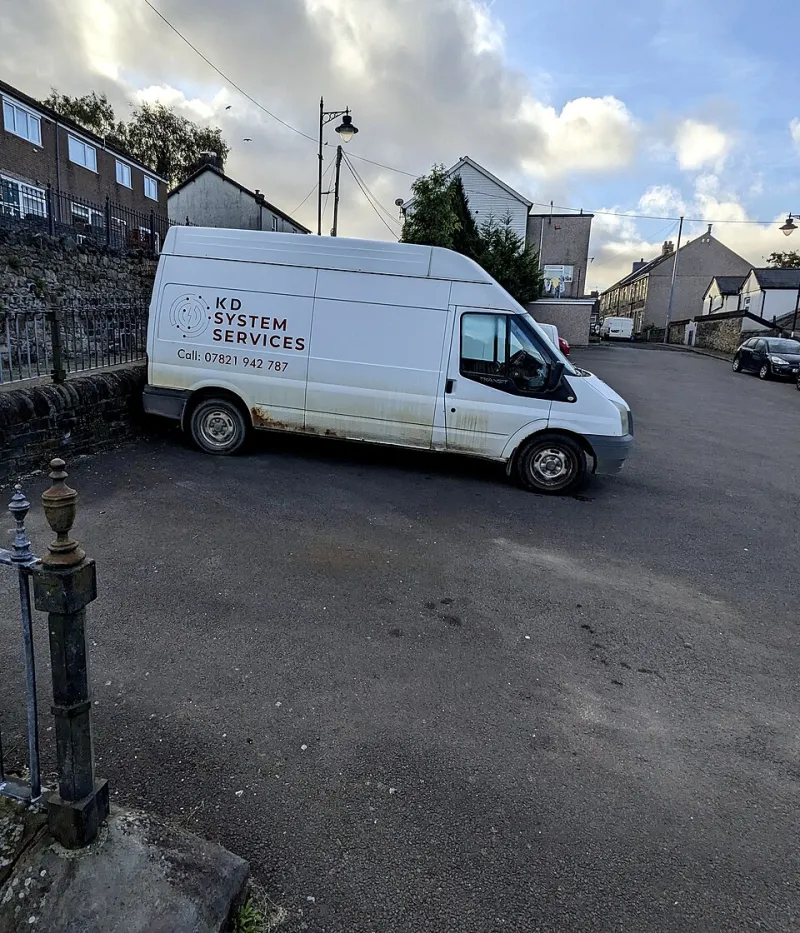
Photo: Jaggery , CC BY-SA 2.0, via Wikimedia Commons
A service contract is often judged in the ordinary course of business: the visit completed, the delivery accepted, the engineer on site. Yet the ordinary course depends on a chain of small physical assurances. A van starts. A driver is available. A site pass is valid. A clean air zone charge has been handled. When one link fails, the client does not see an internal transport problem. They see a supplier who may not arrive.
For UK service suppliers, vehicle continuity deserves the same discipline as financial continuity or key-person cover. It is not enough to know that a replacement vehicle could probably be hired. The position should be evidenced, rehearsed and recorded before a buyer asks. The principle is simple: keep a spare wheel, but also know who will fit it, how quickly, at what cost, and under which contract terms.
Why a vehicle failure becomes a contract event
A missed collection or service visit can trigger more than an apologetic email. It may affect service credits, escalation rights, client confidence and, in public sector work, recorded performance. The risk is heightened where a single vehicle or driver supports a scheduled route, a regular maintenance round or a contractual response window.
CLI Ltd's perspective is that continuity should be demonstrated through records rather than assumed through optimism. A buyer is unlikely to ask for a full transport resilience plan at the point of tender, but a well-organised supplier can produce one quickly if questioned. That readiness is itself a commercial asset.
Four proofs in the continuity file
1. Replacement capacity
A hire-vehicle arrangement should be more than a bookmark on a comparison website. Record the supplier, account terms, vehicle classes available, collection or delivery arrangements, and any notice period. If the contract requires branded vehicles, specialist racking, refrigeration or secure storage, note whether a hire vehicle can be configured in time. For smaller firms, a reciprocal arrangement with another trusted operator may be more realistic than a formal framework, but it should still be written down and tested.
2. Insurance and regulatory compliance
Check that motor insurance covers the replacement vehicle and any additional drivers. Confirm goods-in-transit cover where equipment or client materials are carried. For heavier vehicles, verify operator licence requirements. Keep vehicle tax, MOT and service records accessible, not buried in a glovebox. Where the route enters a UK clean air zone or ultra-low emission zone, record how charges are paid and which vehicle types are compliant. London is the most familiar example, but Birmingham, Bristol, Bradford, Portsmouth and other cities have their own schemes. The compliance position should be checked against the actual routes in the contract, not against general assumptions.
3. Driver cover
A spare vehicle is of limited use without an authorised driver. Maintain a short list of trained drivers who can step in, including agency or partner drivers where appropriate. Record licence checks, expiry dates and any client-specific induction or security clearance. If a driver is off sick or on leave, the continuity plan should state who decides, who calls the client and who confirms that the replacement driver has the right access credentials.
4. Access credentials
Site passes, gate codes, parking permits, fuel cards, keys and delivery authorisations are often managed informally. They should be listed with owners and renewal dates. A replacement driver may be fully licensed and insured but still unable to enter a client site. That is a continuity failure disguised as an administrative one.
A notification script that informs without speculating
The first client conversation matters. It should be factual, brief and focused on the next commitment. A workable script has four parts:
- State the issue and the affected service.
- Confirm what is already in place, such as a replacement vehicle or driver.
- Give the next firm update time, not a vague promise.
- Offer a named contact for the client's operational team.
Avoid speculation about cause or liability in the first call. The purpose is to keep the service relationship steady while facts are confirmed. A short written follow-up should repeat the revised arrangement and the time of the next update. This creates a record that is useful both to the client and to the supplier if the matter is reviewed later.
The quarterly test
Set aside ninety minutes each quarter to test one realistic scenario: a vehicle unavailable at short notice, a driver absent, or an access credential expired. The test does not need to disrupt live work. It can be a desk exercise with three outputs.
First, confirm that a replacement vehicle can be sourced within the promised window and that the hire supplier has the correct account details. Second, check one route against current clean air zone requirements and insurance cover. Third, call the named backup driver and confirm availability and credentials. Record the date, the scenario, the result and any corrective action.
A simple continuity log is sufficient: date, scenario, person testing, evidence seen, gaps found, action owner and completion date. Over time, this log becomes credible evidence that the supplier manages transport risk rather than reacting to it.
Keep the plan proportionate
Not every contract needs a detailed transport resilience manual. A single-vehicle supplier with local clients may need only a one-page schedule and a tested hire arrangement. A multi-site operation with timed deliveries may need more. The test is whether the plan can answer three questions without delay: what replaces the vehicle, who drives it, and how the client is told.
For UK service suppliers, vehicle continuity is part of commercial reliability. It supports the promises made in contracts and protects the relationships behind them. CLI Ltd recommends treating the spare wheel as a managed asset: named, checked and ready before the road closes.